originally posted on bhphotovideo.com
As expected, nothing beats the bare piece of glass, and any additional object in front of the lens, no matter how good coatings are, make it a bit worse. But who told we use UV filter to improve the quality of the images (it's not about making sky looking better) and cannot remove the filter protecting the expensive lenses in the most important photo sessions?Of course, shooting against the sun or bright objects, in some angles you see unavoidable spots of parasite light brought by this thingy.But it's expected. Even if you bought the 10x more expensive, with much more advanced set of coating layers and quality of glass, UV filter.Let them collect the scratches and dust.It's like some insurance.This filter is a good compromise in quality and price. The more ... MoreAs expected, nothing beats the bare piece of glass, and any additional object in front of the lens, no matter how good coatings are, make it a bit worse. But who told we use UV filter to improve the quality of the images (it's not about making sky looking better) and cannot remove the filter protecting the expensive lenses in the most important photo sessions?Of course, shooting against the sun or bright objects, in some angles you see unavoidable spots of parasite light brought by this thingy.But it's expected. Even if you bought the 10x more expensive, with much more advanced set of coating layers and quality of glass, UV filter.Let them collect the scratches and dust.It's like some insurance.This filter is a good compromise in quality and price. The more expensive one is overkill, and the cheap one (kinda Amazon Basic thing or what not) could even ruin your lenses, when broken, by scratching the front lens and damaging thread.My 0.5 cents.
originally posted on bhphotovideo.com
I just acquired a tourist lens for my Pentax, a 28mm to 105mm f3.5-f5.6 (which is really TOO sweet a lens to denote with tourist!). I needed something to protect the front lens element, and as I live at 6500 ft altitude, UV is always the perfect way to go. I bought a wide angle mount to eliminate the possibility of vignetting at 28mm -- probably not a real concern, but it does not hurt to be forward thinking.The first thing about lens filters . . . NEVER, NEVER, NEVER buy cheap glass. It never pays. I have bought Tiffen filters many times. They have never failed me. The little extra you spend to get the Tiffen name is a direct link to their quality.
originally posted on bhphotovideo.com
Excellent filter with no change to optics or photo quality. Had a few amazon basics filters and the glass not nearly as good as these ones... One thing the glass was slightly loose when shipped however very easy to tighten, just use a dental pick on one of the two holes and tighten the ring and perfect! Excellent price for quality of product! Thanks B&H You guys are AWESOME
| General | |
| Product Type | Filter |
| Form Factor | Round |
| Filter Diameter | 49 mm |
| Filter |
As expected, nothing beats the bare piece of glass, and any additional object in front of the lens, no matter how good coatings are, make it a bit worse. But who told we use UV filter to improve the quality of the images (it's not about making sky looking better) and cannot remove the filter protecting the expensive lenses in the most important photo sessions?Of course, shooting against the sun or bright objects, in some angles you see unavoidable spots of parasite light brought by this thingy.But it's expected. Even if you bought the 10x more expensive, with much more advanced set of coating layers and quality of glass, UV filter.Let them collect the scratches and dust.It's like some insurance.This filter is a good compromise in quality and price. The more ... MoreAs expected, nothing beats the bare piece of glass, and any additional object in front of the lens, no matter how good coatings are, make it a bit worse. But who told we use UV filter to improve the quality of the images (it's not about making sky looking better) and cannot remove the filter protecting the expensive lenses in the most important photo sessions?Of course, shooting against the sun or bright objects, in some angles you see unavoidable spots of parasite light brought by this thingy.But it's expected. Even if you bought the 10x more expensive, with much more advanced set of coating layers and quality of glass, UV filter.Let them collect the scratches and dust.It's like some insurance.This filter is a good compromise in quality and price. The more expensive one is overkill, and the cheap one (kinda Amazon Basic thing or what not) could even ruin your lenses, when broken, by scratching the front lens and damaging thread.My 0.5 cents.
I just acquired a tourist lens for my Pentax, a 28mm to 105mm f3.5-f5.6 (which is really TOO sweet a lens to denote with tourist!). I needed something to protect the front lens element, and as I live at 6500 ft altitude, UV is always the perfect way to go. I bought a wide angle mount to eliminate the possibility of vignetting at 28mm -- probably not a real concern, but it does not hurt to be forward thinking.The first thing about lens filters . . . NEVER, NEVER, NEVER buy cheap glass. It never pays. I have bought Tiffen filters many times. They have never failed me. The little extra you spend to get the Tiffen name is a direct link to their quality.
Excellent filter with no change to optics or photo quality. Had a few amazon basics filters and the glass not nearly as good as these ones... One thing the glass was slightly loose when shipped however very easy to tighten, just use a dental pick on one of the two holes and tighten the ring and perfect! Excellent price for quality of product! Thanks B&H You guys are AWESOME
I took test shots on my Canon R6 with and without this Tiffen filter. There was no discernable decrease in image quality with the filter on. It's great when you are always ready to shoot. No more missed shots. If you are tired of putting the lens cap back on every time you take a break, here is a quality and inexpensive alternative. I do put the cap back on when I am done for the day and put the camera back in my bag.
I bought this as a lens protection filter because it was the only 34mm in stock. Only two 'regular' mfgs make a 34mm - Tiffen and Heliopan.This Tiffen is uncoated. Pretty much what that means is that the only time it does not degrade your image is if it is an overcast day, or the sun is behind your back. if you take pics with the sun in the image, or just outside, the flare - veiling and otherwise - will ruin your shot. Same if you take pics at night and there are light points in your frame - they will reflect back with the uncoated filter.I read a big comparison test on lenstip, and the Heliopan is only slightly better! So I am really glad that filter was out of stock as it is about 5 times as expensive and basically not good.I didn't bother returning this ... MoreI bought this as a lens protection filter because it was the only 34mm in stock. Only two 'regular' mfgs make a 34mm - Tiffen and Heliopan.This Tiffen is uncoated. Pretty much what that means is that the only time it does not degrade your image is if it is an overcast day, or the sun is behind your back. if you take pics with the sun in the image, or just outside, the flare - veiling and otherwise - will ruin your shot. Same if you take pics at night and there are light points in your frame - they will reflect back with the uncoated filter.I read a big comparison test on lenstip, and the Heliopan is only slightly better! So I am really glad that filter was out of stock as it is about 5 times as expensive and basically not good.I didn't bother returning this filter as I will use it in dusty places, or by the ocean where there is salt/sand in the air. That's what it is worth for.What I do recommend is getting a 34-37mm step up ring as that then opens your filter selection to mfgs who make superb filters like the top of the line Hoya range, or B+W.
Working hard and saving for that expensive lens you just purchased makes you want to protect that equipment as much as possible. A simple UV filter is a relatively inexpensive but necessary item to protect that purchase especially if you take your gear out of the studio. Tiffen has been producing these filters for many years and comes in all lens sizes. Their quality is excellent and do not dissapoint.
I'm not sure how, but last week I heard the sound of cracking glass coming from my camera. I cringed to think of what I could find. I found that the UV protection filter had somehow cracked ... but the main lens glass was Ok!! B&H shipped the new filter quickly and I'm back in business. I highly recommend the filter (no impact on the quality of my photos) ... and B&H's quality response.
I bought the Tiffen because of price to quality comparision.The glass in the fixed and moveable sections seems to be much better than the SunPak. (After about fifteen years of use, the Sunpak started delaminating around the outside of each piece. The centers remain as new.)On the con side, the Tiffen rings are not as thick as on the SunPak and thus do not have as many screw-on threads, This makes the Tiffen harder to screw on and off and more likely to fall off the lens. The rotating portion is not as thick and makes it somewhat harder to adjust the degree of polarization desired.Both seem about equal in the degree of polarization possible.I have not compared to similar filters by B&W and others because I don't use the polarizer enough to warrant the extra ... MoreI bought the Tiffen because of price to quality comparision.The glass in the fixed and moveable sections seems to be much better than the SunPak. (After about fifteen years of use, the Sunpak started delaminating around the outside of each piece. The centers remain as new.)On the con side, the Tiffen rings are not as thick as on the SunPak and thus do not have as many screw-on threads, This makes the Tiffen harder to screw on and off and more likely to fall off the lens. The rotating portion is not as thick and makes it somewhat harder to adjust the degree of polarization desired.Both seem about equal in the degree of polarization possible.I have not compared to similar filters by B&W and others because I don't use the polarizer enough to warrant the extra expense.If the rings were thicker, I would have rated it higher.
On two occasions in the past 4 years I have experienced an unfortunate bag drop with a downward-facing lens stored inside, and on both occasions the UV Protector Filters, which I leave applied to my lenses at all times, have shattered and taken the brunt of the fall and left the lenses undamaged.I recommend to everyone I speak with about photography to invest in a UV Protector Filter to protect valuable lenses from basic dirt, dust and scratches; and as an insurance policy to potentially prevent a $2500 spill.This item is an absolute necessity and I will not shoot without one on the front of my lens. It would be totally reckless not to have a UV Protector Filter applied to a lens from the moment it is taken out of the box. I cannot praise and recommend this ... MoreOn two occasions in the past 4 years I have experienced an unfortunate bag drop with a downward-facing lens stored inside, and on both occasions the UV Protector Filters, which I leave applied to my lenses at all times, have shattered and taken the brunt of the fall and left the lenses undamaged.I recommend to everyone I speak with about photography to invest in a UV Protector Filter to protect valuable lenses from basic dirt, dust and scratches; and as an insurance policy to potentially prevent a $2500 spill.This item is an absolute necessity and I will not shoot without one on the front of my lens. It would be totally reckless not to have a UV Protector Filter applied to a lens from the moment it is taken out of the box. I cannot praise and recommend this simple, inexpensive item highly enough.
You can spend 3 our more times the price of this filter for UV protection, but I don't think you'll see any improved filtration. switched from Nikon filters longs ago, and can see no difference. Just for comparison, I recently took the same photo twice, once with a Nikon UV, once with a Tiffen UV (talk about compulsive). Not difference discernible on a 27 inch computer screen or in 8 x 10 prints.Very slight vignetting with ultra wide lenses at wide open apertures; this is a minor problem (easily corrected in post exposure processing) with all screw-in type filters I've used. Easiest fix: stop down a stop or two to f5.6 or f8, obtain greater depth of field (which is generally what you want with wide angle lenses), and Voila, vignetting is gone.
| General | |
| Product Type | Filter |
| Form Factor | Round |
| Filter Diameter | 49 mm |
| Filter |
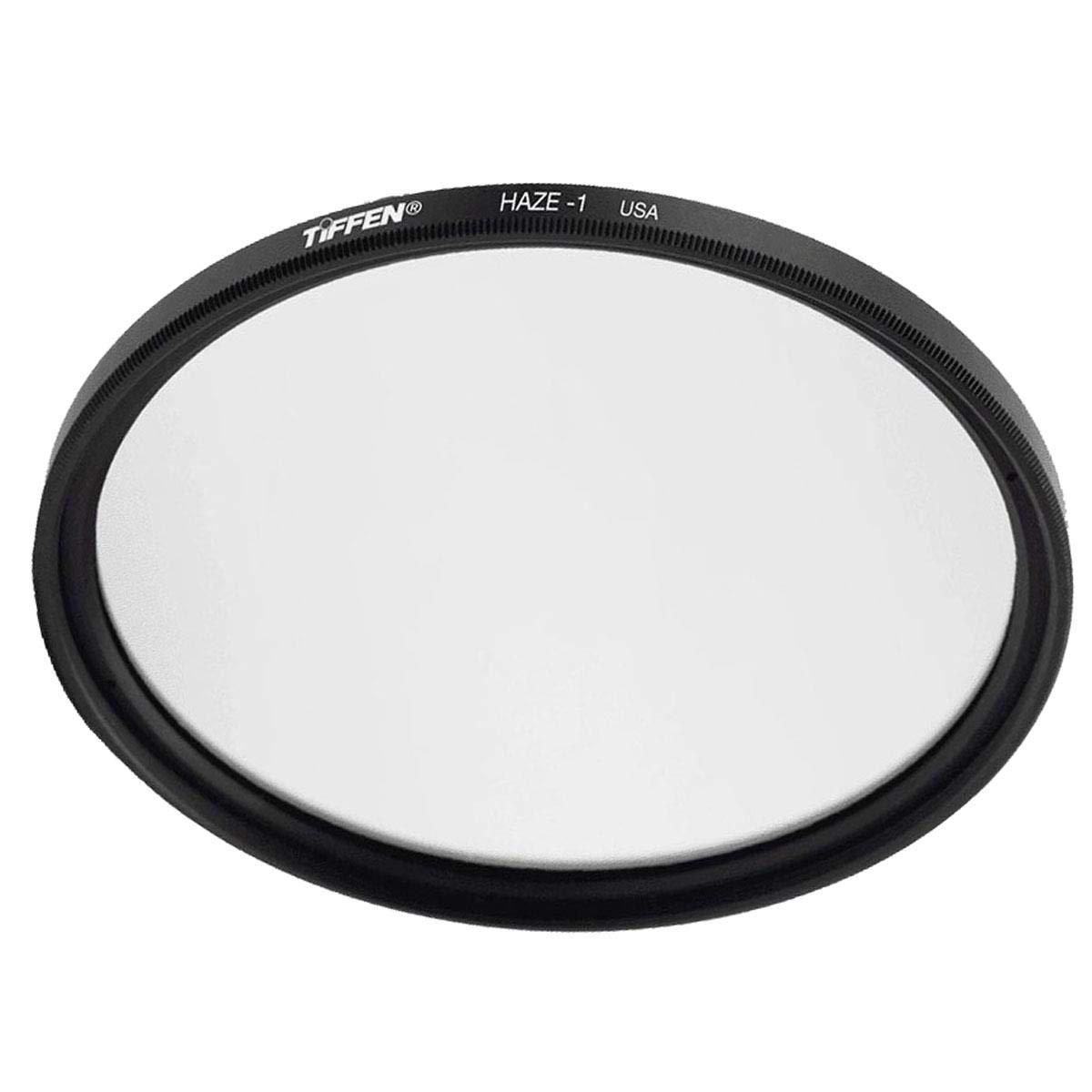
Film, as well as video, often exhibits a greater sensitivity to what is to us invisible, ultraviolet light. This is most often outdoors, especially at high altitudes, where the UV-absorbing atmosphere is thinner; and over long distances, such as marine scenes. It can show up as a bluish color cast with color film, or it can cause a low-contrast haze that diminishes details, especially when viewing far-away objects, in either color or black-and-white. Ultraviolet filters absorb UV light generally without affecting light in the visible region. It is important to distinguish between UV-generated haze and that of air-borne particles, such as smog. The latter is made up of opaque matter that absorbs visible light as well as UV, and will not be appreciably removed by a UV filter. Haze 1 reduces excessive blue haze caused by UV light by absorbing 71% of UV. It's great for all-around UV control. This filter eliminates UV problems from most situations where increased haze tends to wash out color and image clarity.
Film, as well as video, often exhibits a greater sensitivity to what is to us invisible, ultraviolet light. This is most often outdoors, especially at high altitudes, where the UV-absorbing atmosphere is thinner; and over long distances, such as marine scenes. It can show up as a bluish color cast with color film, or it can cause a low-contrast haze that diminishes details, especially when viewing far-away objects, in either color or black-and-white. Ultraviolet filters absorb UV light generally without affecting light in the visible region. It is important to distinguish between UV-generated haze and that of air-borne particles, such as smog. The latter is made up of opaque matter that absorbs visible light as well as UV, and will not be appreciably removed by a UV filter. Haze 1 reduces excessive blue haze caused by UV light by absorbing 71% of UV. It's great for all-around UV control. This filter eliminates UV problems from most situations where increased haze tends to wash out color and image clarity.
Film, as well as video, often exhibits a greater sensitivity to what is to us invisible, ultraviolet light. This is most often outdoors, especially at high altitudes, where the UV-absorbing atmosphere is thinner; and over long distances, such as marine scenes. It can show up as a bluish color cast with color film, or it can cause a low-contrast haze that diminishes details, especially when viewing far-away objects, in either color or black-and-white. Ultraviolet filters absorb UV light generally without affecting light in the visible region. It is important to distinguish between UV-generated haze and that of air-borne particles, such as smog. The latter is made up of opaque matter that absorbs visible light as well as UV, and will not be appreciably removed by a UV filter. Haze 1 reduces excessive blue haze caused by UV light by absorbing 71% of UV. It's great for all-around UV control. This filter eliminates UV problems from most situations where increased haze tends to wash out color and image clarity.
Film, as well as video, often exhibits a greater sensitivity to what is to us invisible, ultraviolet light. This is most often outdoors, especially at high altitudes, where the UV-absorbing atmosphere is thinner; and over long distances, such as marine scenes. It can show up as a bluish color cast with color film, or it can cause a low-contrast haze that diminishes details, especially when viewing far-away objects, in either color or black-and-white. Ultraviolet filters absorb UV light generally without affecting light in the visible region. It is important to distinguish between UV-generated haze and that of air-borne particles, such as smog. The latter is made up of opaque matter that absorbs visible light as well as UV, and will not be appreciably removed by a UV filter. Haze 1 reduces excessive blue haze caused by UV light by absorbing 71% of UV. It's great for all-around UV control. This filter eliminates UV problems from most situations where increased haze tends to wash out color and image clarity.

